
RELEASE: Open Data Impact: When Demand and Supply Meet
23 March 2016
Key Findings of the Open Data Impact Case Studies
By Stefaan Verhulst and Andrew Young
Today, in “Open Data Impact: When Demand and Supply Meet,” the GovLab and Omidyar Network release key findings about the social, economic, cultural and political impact of open data. The findings are based on 19 detailed case studies of open data projects from around the world. These case studies were prepared in order to address an important shortcoming in our understanding of when, and how, open data works. While there is no shortage of enthusiasm for open data’s potential, nor of conjectural estimates of its hypothetical impact, few rigorous, systematic analyses exist of its concrete, real-world impact.
About the case studies and odimpact.org
The 19 case studies that inform this report, all of which can be found at Open Data’s Impact (odimpact.org), a website specially set up for this project, were chosen for their geographic and sectoral representativeness. They seek to go beyond the descriptive (what happened) to the explanatory (why it happened, and what is the wider relevance or impact).
Each case study was built using a combination of desk research of existing evidence of impact and, especially, in-depth interviews with key players and stakeholders. An early version of each case study was also made available online and subjected to an open peer-review process. The paper released today includes valuable feedback and comments received as part of this process.
In order to systematically interpret the resulting data, we prepared an analytical framework that we applied across the 19 case studies. This framework examines open data projects through three categories, each of which is briefly described below, and examined at greater length in the accompanying paper:
- Key dimensions of impact;
- Key enabling conditions;
- Key challenges.
Dimensions of Impact
Across geographies and sectors, we uncovered four common areas where open data is having an impact (positive or negative):
- Improving Government: Open data is improving government, primarily by tackling corruption and increasing transparency, and enhancing public services and resource allocation.
- Empowering Citizens: Open data is empowering citizens to take control of their lives and demand change by enabling more informed decision making and new forms of social mobilization, both in turn facilitated by new ways of communicating and accessing information.
- Creating Opportunity: Open data is creating new opportunities for citizens and organizations, by fostering innovation and promoting economic growth and job creation.
- Solving Public Problems: Open data is playing an increasingly important role in solving big public problems, primarily by allowing citizens and policymakers access to new forms of data-driven assessment of the problems at hand. It also enables data-driven engagement, producing more targeted interventions and enhanced collaboration.
Enabling Conditions
In order to achieve the potential of open data and scale the impact of the individual projects discussed in our report, we need a better – and more granular – understanding of the enabling conditions that lead to success. We found 4 central conditions (“4Ps”) that play an important role in ensuring success:

- Partnerships: Intermediaries and data collaboratives play an important role in ensuring success, allowing for enhanced matching of supply and demand of data.
- Public infrastructure: Developing open data as a public infrastructure, open to all, enables wider participation, and a broader impact across issues and sectors.
- Policies: Clear policies regarding open data, including those promoting regular assessments of open data projects, are also critical for success.
- Problem definition: Open data initiatives that have a clear target or problem definition have more impact and are more likely to succeed than those with vaguely worded statements of intent or unclear reasons for existence.
Core Challenges
Finally, the success of a project is also determined by the obstacles and challenges it confronts. Our research uncovered 4 major challenges (“4Rs”) confronting open data initiatives across the globe:
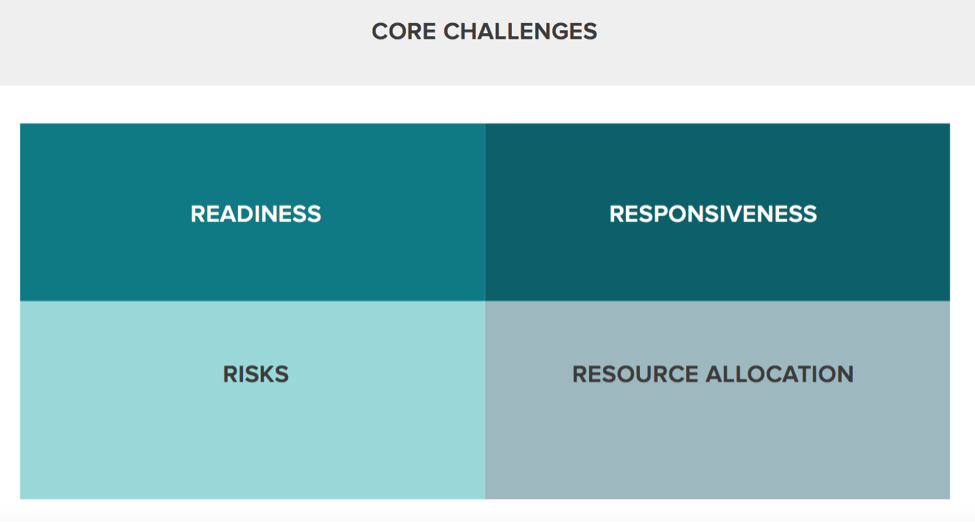
- Readiness: A lack of readiness or capacity (evident, for example, in low Internet penetration or technical literacy rates) can severely limit the impact of open data.
- Responsiveness: Open data projects are significantly more likely to be successful when they remain agile and responsive—adapting, for instance, to user feedback or early indications of success and failure.
- Risks: For all its potential, open data does pose certain risks, notably to privacy and security; a greater, more nuanced understanding of these risks will be necessary to address and mitigate them.
- Resource Allocation: While open data projects can often be launched cheaply, those projects that receive generous, sustained and committed funding have a better chance of success over the medium and long term.
Toward a Next Generation Open Data Roadmap
The report we release today concludes with ten recommendations for policymakers, advocates, users, funders and other stakeholders in the open data community. For each step, we include a few concrete methods of implementation – ways to translate the broader recommendation into meaningful impact.
Together, these 10 recommendations and their means of implementation amount to what we call a “Next Generation Open Data Roadmap.” This roadmap is just a start, and we plan to continue fleshing it out in the near future. For now, it offers a way forward. It is our hope that this roadmap will help guide future research and experimentation so that we can continue to better understand how the potential of open data can be fulfilled across geographies, sectors and demographics.

Additional Resources
In conjunction with the release of our key findings paper, we also launch today an “Additional Resources” section on the Open Data’s Impact website. The goal of that section is to provide context on our case studies, and to point in the direction of other, complementary research. It includes the following elements:
- A “repository of repositories,” including other compendiums of open data case studies and sources;
- A compilation of some popular open data glossaries;
- A number of open data research publications and reports, with a particular focus on impact;
- A collection of open data definitions and a matrix of analysis to help assess those definitions.
We welcome your thoughts and comments on any of the information included here, in our report, or at our website. To leave comments or suggestions, please contact Stefaan Verhulst, Chief Research and Development Officer ([email protected]).
