A crowdmap of 1000 + Internet Governance actors – Composition and Trends
08 February 2016
Internet governance may seem like an arcane topic, but it affects at least 3.29 billion people around the world (the total number of Internet users, according to Internet Live Stats). In fact, Internet governance is arguably relevant to a far larger number of people: the way in which issues like access, cost and digital security are determined will help decide whether and how the current pool of non-users is eventually brought online.
The NetMundial conference, held in Brazil in 2014, was designed to address some of these issues by facilitating a system of governance that is similar in scope and design to the Internet itself: open, bottom-up, participatory and enabling of innovation. In particular, the NetMundial principles envision a more distributed and collaborative approach to governance, one that would build on the expertise and wisdom of a widely dispersed group of actors spread across the globe.
To better understand the current landscape of governance, as well as to identify opportunities for more collaboration, the NetMundial Initiative asked the GovLab to develop what we now call the NetMundial Solutions Map. The Map, developed in collaboration with Second Rise and launched in Beta last year, is a tool to support information sharing and collaboration on Internet governance issues. It contains a variety of mostly crowdsourced information regarding Internet issues, actors, and possible solutions (e.g., laws and policies, technical standards, and code). Built using a participatory and agile methodology, including a number of interviews with key Internet governance actors, the Map represents a major effort to bring together in one, searchable database what until now has remained a widely dispersed and fragmented body of knowledge. At present, the Map contains over 1000 individuals and organizations—possibly the largest single repository of knowledge on Internet governance actors.
In addition to providing what we hope is a helpful resource for those working in Internet governance, the Map also allows us to better understand the field and perform new forms of analysis. Having all this information together in a single place permits us to note and consider the significance of patterns and forms of interaction among actors in the governance landscape. In so doing, we can, for example, identify opportunities for collaboration, vested interests that may resist change, and forms of social or global exclusion that need should be targeted and addressed by Internet governance mechanisms.
An early analysis performed by The GovLab has identified the following composition and trends:
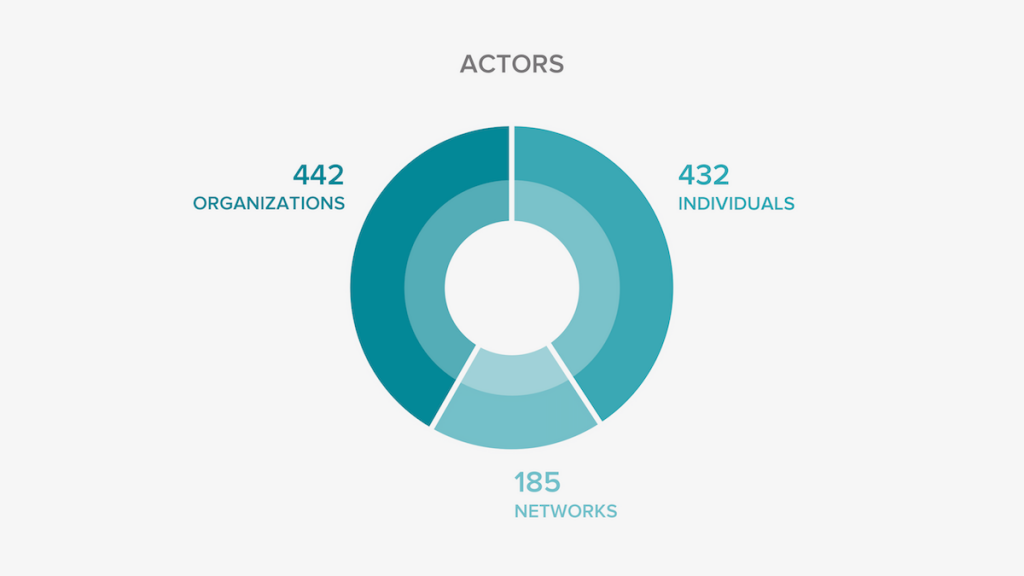
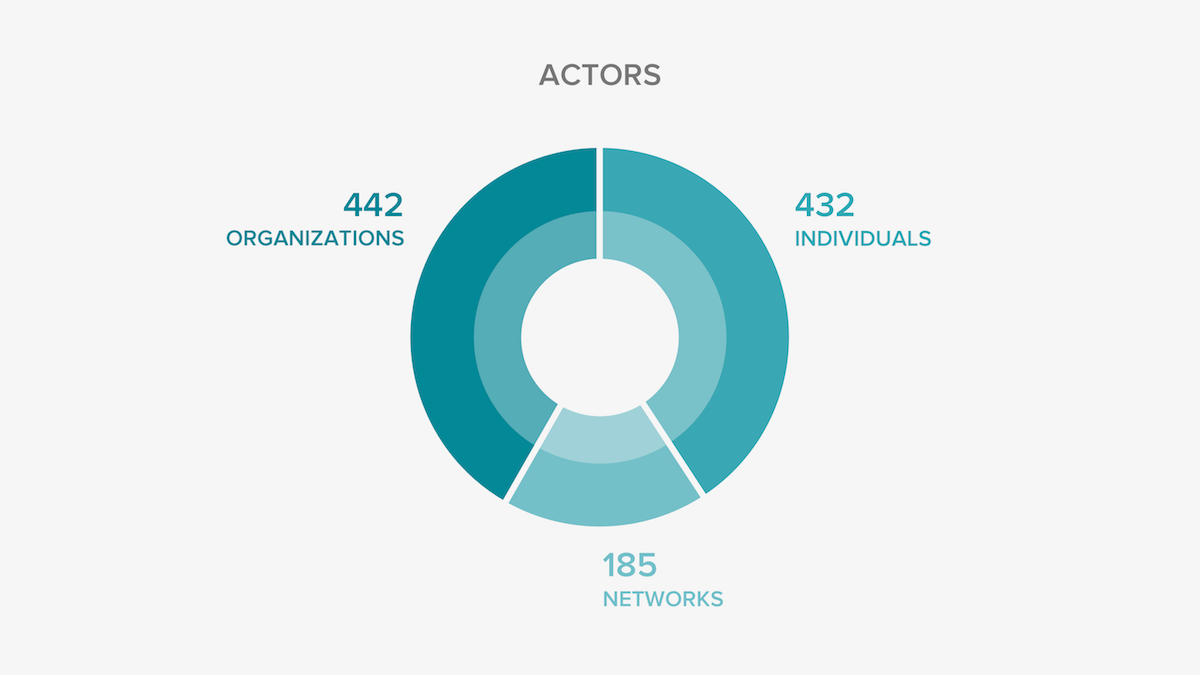
- Currently, the Map contains 442 organizations, 432 individuals, and 185 networks:
- The majority of those on the Map are positioned as multinational actors on the global stage (241 organizations, 261 individuals, and 133 networks). Far fewer national Internet Governance actors are represented (only 41 countries have national representation on the Map). While this is perhaps unsurprising, given the global nature of the Internet, it does raise questions about how smaller or less powerful countries can ensure that their interests are represented.
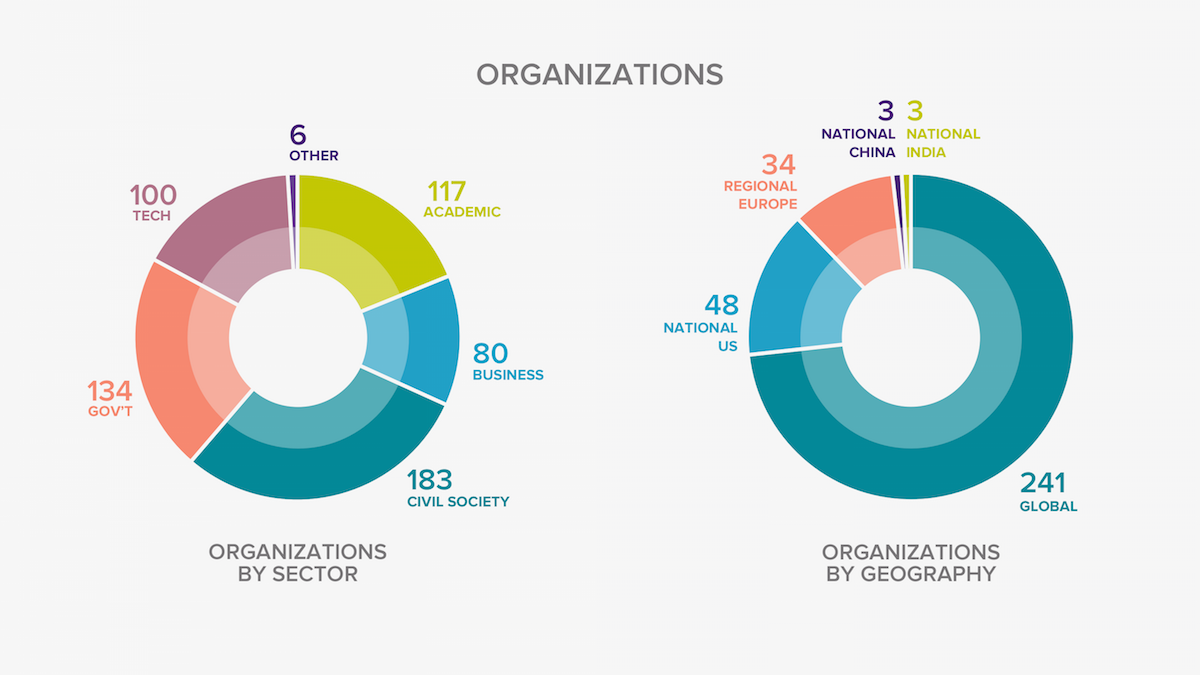
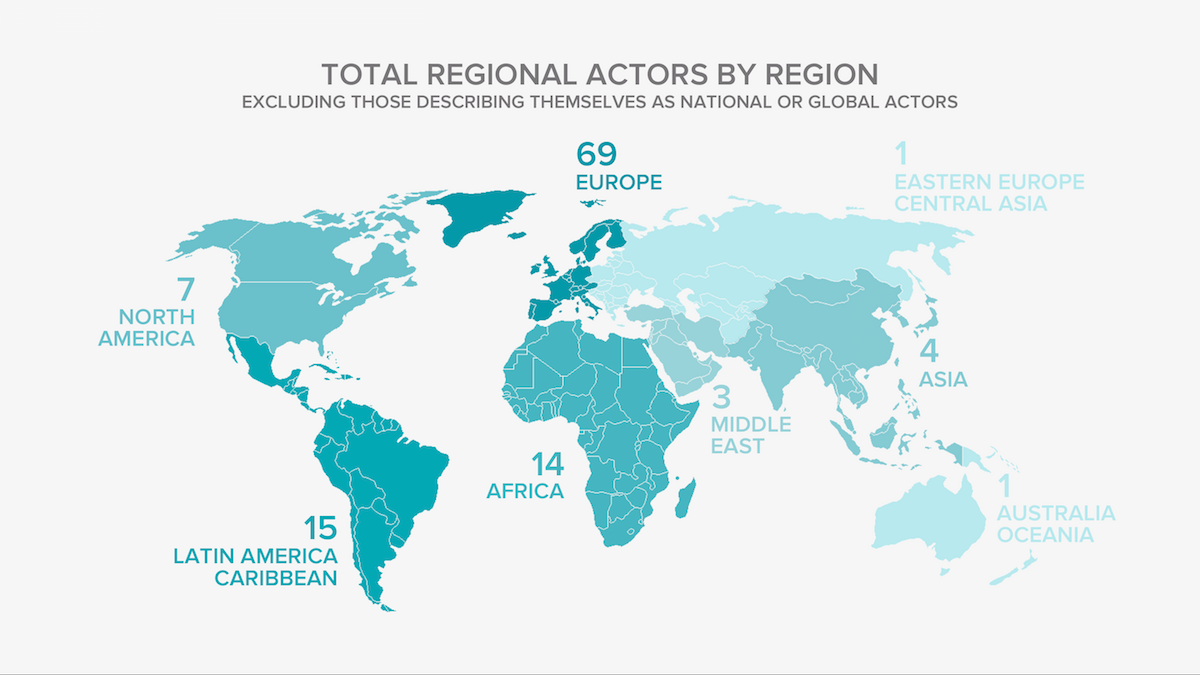
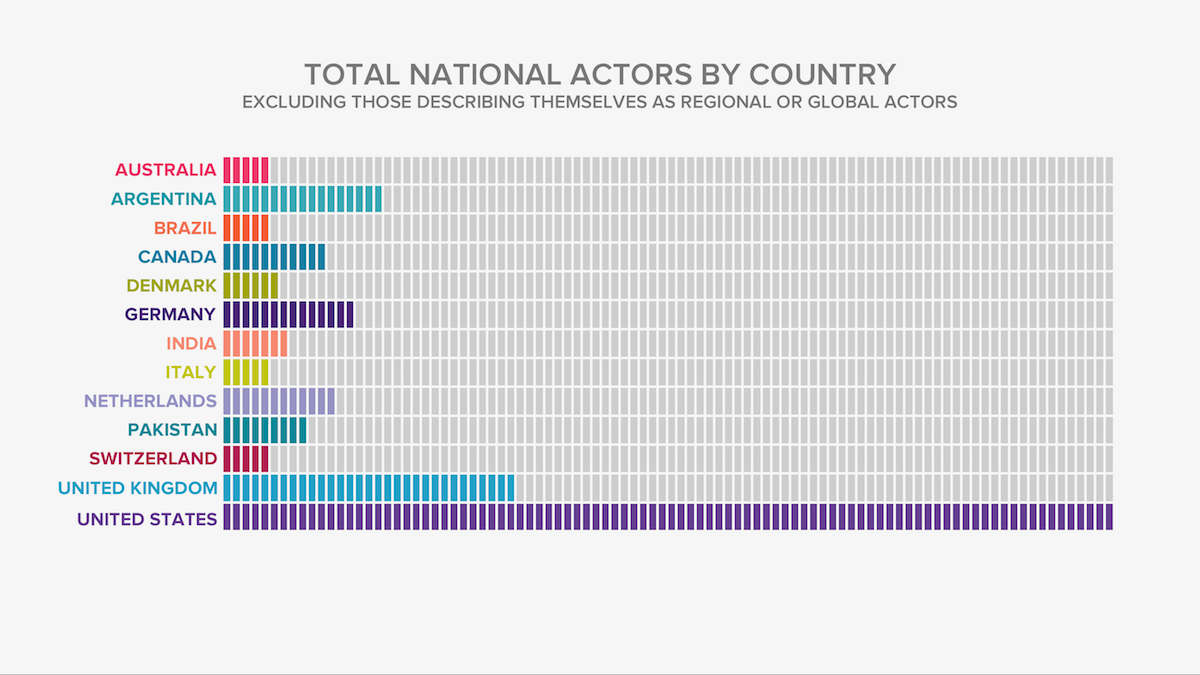
- There is a notable geographic imbalance on the map, suggesting the need for more diversity in global Internet governance. In particular, American, British, and European actors are disproportionately represented. Of 289 national actors on the map, 125 come from the UK and US, while 69 of the 114 regional actors were from Europe.
- Women are notably underrepresented as actors on the Map: they account for only 142 of 432 individual actors. This is despite concerted efforts by contributors to the Map to include women and their contributions to Internet governance in the database.
- While the Map captures academic, intergovernmental and civil society actors well, its representation of the Internet governance ecosystem would be improved by greater mapping of the tech and business communities (162 of 432 individual actors, and 180 of 442 organizations).
- The issues with the greatest number of associated actors were privacy and data protection (89 actors), freedom of expression (83 actors), and child safety online (79 actors).
Are you #OntheMap?
The above figures represent the results of a very preliminary mapping. While we crossed the 1000 number, many actors remain to be added, and many more issues can be probed using the Map. The database is currently open to all, and we invite the Internet community at large—especially but not restricted to those concerned with Internet governance—to become a contributor and add themselves #OnTheMap.